Wednesday, November 30, 2016

Fourth Day of Advent: Listen

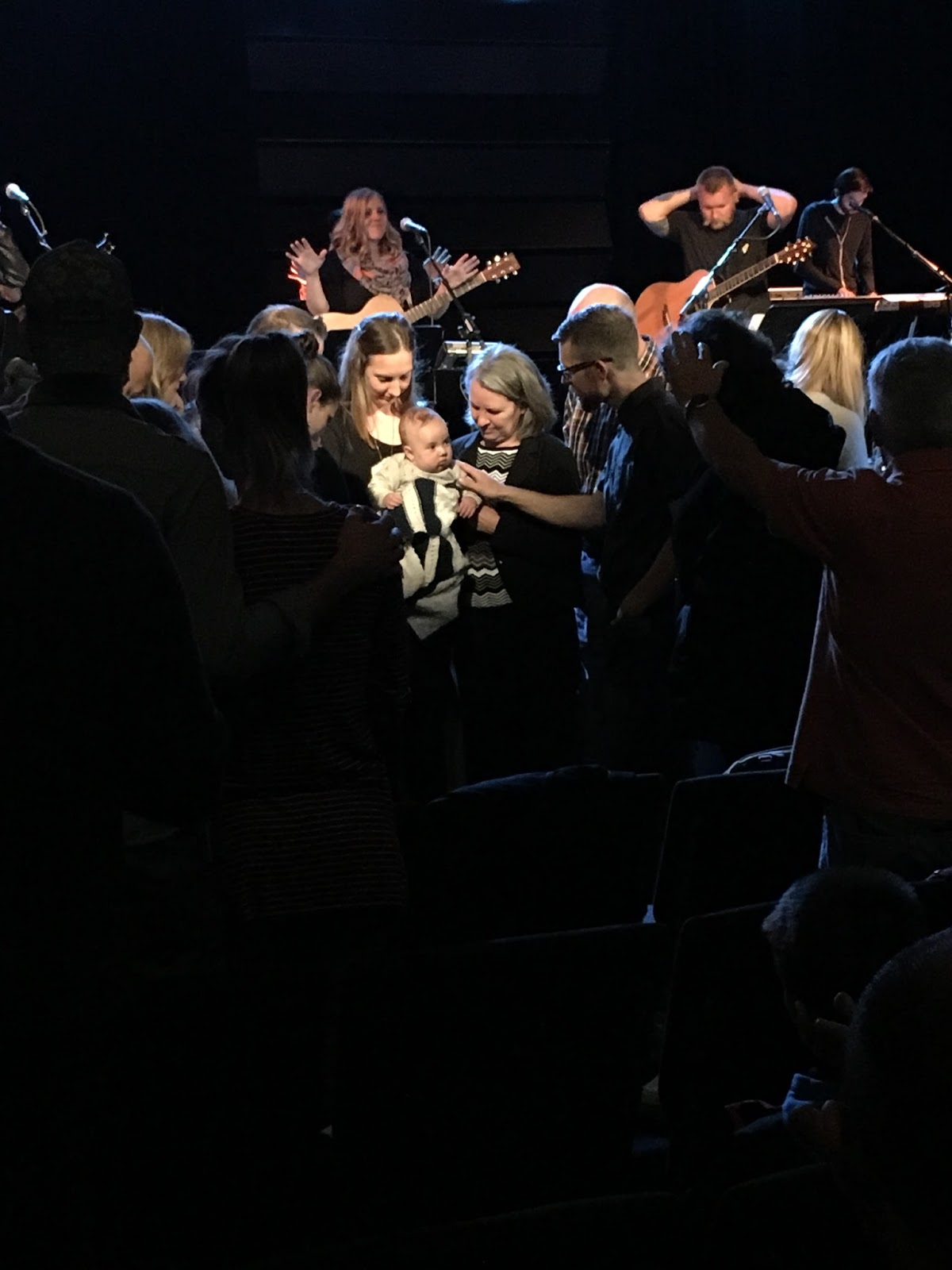
Not only did I struggle to find an image for today's AdventWord "listen", I also struggled to write an upbeat encouraging Christmas-y ("Sleigh bells ring, are you listening?") blog. Then, the picture I took (the second one below) when posted shows mostly the wall in the post! So, for purposes of posting, I am adding the picture directly below: Grandpa listening to his granddaughter while the youngest one listens to both.


We struggle to listen and be plugged in -- to God, to each other. Perhaps there are too many voices and too many noises for us to hear the Lord God's still, small (small in sound, quiet) voice, a powerful voice gentle and meek. Not like a baby's voice, as precious as the Christmas image of Jesus as a baby is. Yet when we quiet ourselves, we can hear Him, and in hearing Him, we can then hear the lonely, the lost, the hurting. We can hear Him say:

"But I say unto you which hear, Love your enemies, do good to them which hate you, Bless them that curse you, and pray for them which despitefully use you....Love ye your enemies, and do good, and lend, hoping for nothing again; and your reward shall be great, and you shall be the children of the Highest: for he is kind unto the unthankful and to the evil. Be ye merciful, as your Father also is merciful" (portions from Luke 6:27-36 -- the whole passage is Jesus' amazing argument as to why we are called to love).


My friend in the picture above listened not only to this dear man play the piano in a shopping mall, but also listened as he told us his story. She brought a moment of joy to his lonely life. Her presence was a gift which said to him, "You are loved."

As we go about shopping during this Advent season, might we consider that the gift of listening is truly one that says, "You are loved." 

Tuesday, November 29, 2016

Third Day of Advent: Renewal and Hope in Christ's Name

Renew? Made fresh; the old made new? What sort of photo could I take this day to show "renew"? I didn't know anyone who was renewing their wedding vows today. Then, I glanced over at my Christmas Cactus.


This cactus is seventeen years old. It was given to me by a student when I taught fourth grade. It's a miracle that it is still alive (I'm not the best gardener.) The plant was surviving but not thriving as shown by the inner leaves on the lower left. Then, a cousin posted a picture of her Christmas cactus in full bloom. When I asked her how she encouraged the plant to bloom, she didn't do much to it except place it in a window with morning light. I changed my plant to the other side of the house (as shown in the lower righthand picture) and my plant was renewed!

I realized I have experienced that renewal in relationship with Christ and in relationship with Christ's people. This picture below is where I met with my classmates from Renovaré -- a French form of the word "renew".


I learned anew to place my hope in Christ's name and friendship, of Whom was written:

" But when Jesus knew [that the Pharisees held a council against him, how they might destroy him], he withdrew himself from thence: and great multitudes followed him, and he healed them all; And charged them that they should not make him known: That it might be fulfilled which was spoken by Esaias the prophet, saying,  Behold my servant, whom I have chosen; my beloved, in whom my soul is well pleased: I will put my spirit upon him, and he shall show judgment to the Gentiles. He shall not strive, nor cry; neither shall any man hear his voice in the streets. A bruised reed shall he not break, and smoking flax shall he not quench, till he send forth judgment unto victory. And in his name shall the Gentiles trust" (Matthew 12: 14-21). 

During this season of Advent (and indeed every season) I need to place myself in the Light of the One in Whom I trust, hope in His name, and be renewed.


#adventword #renew

Monday, November 28, 2016

2nd Day of Advent: Love and Waiting in Hope


In this four generation picture, love abides. My father has Alzheimer's. He doesn't remember my name but still remembers some of the time that I am family. He gets up in the middle of the night and doesn't know how to get back to his room. He doesn't like to take showers or baths. He is like a little boy, but he is a little boy who still knows what love looks like. 

My dad is "waiting in hope", another phrase for this advent day. 

"Out of the depths have I cried unto thee, O Lord...I wait for the Lord, my soul does wait, and in his word do I hope...My soul waits for for the Lord more than they that watch for the morning...for with the Lord there is mercy, and with him is plenteous redemption..." (from Psalm 130). 

And, when my dad does not remember to wait in hope, we stand in the gap and do the waiting for him. That's what love looks like. Love is a choice. We choose each day to love, to will the good of others. What is the good of others? Can't get much better than really looking at how Jesus treated people: patiently, kindly, courteously, humbly, wisely, gently, lovingly. Nothing can separate us from this love. 

"...neither death, nor life, nor angels, nor principalities, nor powers, nor things present, nor things to come, nor height, nor depth, nor any other creature shall be able to separate us from the love of God, which is in Christ Jesus our Lord" (from Romans 8: 38-39). 

Yesterday's #adventword" "shine" was a struggle when the day was cloudy and "flexibility" was a more important word than "shine." Yet, this morning, the sun broke through! 


The sun doesn't always "come up tomorrow", because life's griefs are great, but I wait in hope knowing that God's love abides.

"And now abides faith, hope, love, these three; but the greatest of these is love." 

The One who shows this perfectly is Jesus. This Advent season, I prepare not for the coming of a baby (wonderful as that advent is), but rather for the coming of Jesus who chooses me and chooses to be in relationship with me, with nothing separating me from His love. While I can not show this love completely, it does not stop me from following like a child after Him: loving God and loving others, waiting in hope. 

Sunday, November 27, 2016

Shine

Last night, I carried my husband's computer out of the bedroom and sat it in the kitchen. In the kitchen, it could shine off and on to its megabyte hearts' content. As for me, I need the dark at night so I can sleep well; otherwise, this woman is not going to shine during the day.

Yet, the shine of humanity is seen best, like faraway stars, in the midst of darkness. What kind of darkness? To color a dark night sky, one chooses the deepest blacks and blues. But no crayon can literally illustrate the world where we need to shine. A gifted photographer can capture hate, anger, despair, discourtesy, ungratefulness, greed, malice, loneliness, poverty, injustice, hunger -- but he or she will do so by capturing looks, body positions, the story itself. The colors and use of or absence of light will be a part of that composition, but other clues are needed. Is that dark forest tranquil or menacing? Is this a dark night of my soul or the peaceful rest I need?

The man who grumbled at me in line at the grocery store might be going home to sit in deep depression; the woman smiling as she chatters away might be intensely lonely. Sometimes where I need to shine is easily identifiable and sometimes it is not. Most often I have found out that I have been a shining light in someone's life only after the fact.

Perhaps, if a candle could think, it would actually struggle to shine if it worried about whether it was shining, how far, how often, and how bright. Truly that candle is only shining because something greater than the candle set it aflame. So, too with me, Someone greater than I, sets me aflame. However, I'm not a candle and I do have control over my wick. I don't have time to let the man go ahead of me in line. (It is the Christmas season, after all, and I have so much to do!) That woman is fine: don't worry about listening or being present to her. After all, I'm only a little candle. Let the big candles do the shining.

I experimented with candle shine and I tried to research whether a big candle lights up a room more than a small candle. It didn't seem a discernible difference to me, but before I could track down all the research, life happened. I planned out some lovely "shine" pictures as I contemplated the word shine and embark on an Advent Adventure with #adventword : morning sunrise and a first day of Advent candle lit by my youngest grandson and his great grandfather. None of that happened. We woke up to rain; I could only find a dried up wreath in the Christmas storage and then I lost the special Advent prayer we were going to pray. Isn't that what life often is like? I seek the Hallmark moments (or now the Pinterest experience) and instead we are called to shine or look for shine in the midst of rain, during days of watching a father fall further into his Alzheimer's world, with dried up wreaths and lost plans.


It's dawning on me that the shine of God, like the sun (but greater than), can be seen even in the day unless clouds (of doubt?) hide it, and the Almighty I AM shines on believer and non-believer. I also see the shine of God in the midst of community. Today is not only the first day of Advent but also my birthday. My little church prayed a blessing specifically over me during service and while I have no picture of this special time, it will be a moment that shines out in my memories. The lack of traditional ways to represent "shine" also caused me to look for other ways to show shine.


I imagine that humanity looks to many sources for shine and even though I know this is a bit humorous using a pot of coffee to show shine, basically I was looking all over the house for reflected shine. Maybe it will remind me to not fall into the ways of worldliness (consumerism, materialism, egoism) to look for shine, but to look for how God shines in places and people where and who I think might not represent shine. And, often our everyday blessings do shine if we only look for them.


I am encouraged when I read one Advent printout that lists this first day of Advent as representing "unseen hope". To the one who is searching for the shine of this day, this season, this year, I pray for you glances of shine that remind you of hope that is not fully seen yet. Just in case you can see my husband's knee, he has had surgery and full recovery is not seen yet, but we have hope, and we have this precious shiny face in our lives as well as other people and moments for which I am so thankful (and can not possibly write of without making this blog yet longer).
#adventword #shine

Monday, October 24, 2016

At Least I Remembered to Take a Picture This Time


At least this time it's only hash browns which exploded all across the counter and floor, and it's not shattered glass. This time I was trying to break apart the hash browns that were frozen in a solid mass. Again, my first attempts did not result in disaster so I kept whacking the bag against the counter to break up the last solid pieces. Then, the bag exploded. 

I write this because, really, aren't most of our days (at least for those of us in countries with frozen hash browns easily bought at the grocery store) filled with mundane tasks, some of which go astray? Maybe you don't have as many kitchen mishaps as I do, but it gives you something to chuckle about. Or, the stories resonate with you: "I've had days like that." 

I write to lead me into deeper ways of thinking: I've realized that I multi-task when I cook. I like food. I somewhat like to cook. But, it's not a priority enough for me to focus on it. This, in turn, led me to think what my passions truly are, what do I focus on. 

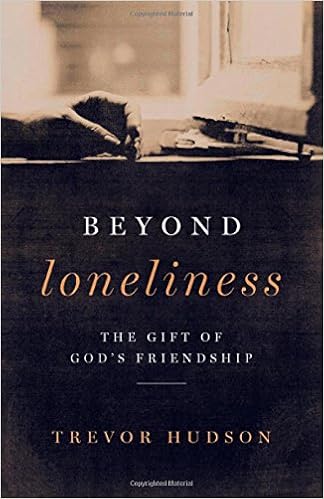
I write to encourage others. In my last blog (see "shattered glass" in the first paragraph), I wrote about the opposite of loneliness: friendship. Friendship, whether with God or with others, involves "(1) spending time together, (2) learning about the other, (3) being honest and transparent, (4) learning to be a good listener, (5) allowing for changing and maturing views of the other, and (6) learning how to enjoy being silent together" (Gary Moon's forward in Trevor Hudson's book Beyond Loneliness as Moon quotes *James Martin's insights from **William A. Barry).  

Social media can not replace the face-to-face time, but it can be, when used in encouraging ways, be a moment in time where we can feel that we have been seen and heard and loved. I so appreciated the give and take when my own daughter posted her "When Days Seem Hard" It was just what one mom needed to hear so that she could pick herself up and begin again. 

Loneliness can't be cured by social media, blogs, etc., but I hope I can use technology positively to invite myself and others into a friendship with God (the great thing is God is available during poopy diapers, academic meetings, traffic jams...in other words all the time), and into exploring ways of friendship with three-dimensional people (did I choose the right term...lol...geometry was never a focus of mine). For me, it takes intentionality. To not give up when lives seem so busy. To look at my schedule and see where I can give up something simply time-consuming and replace it with friendship. I'm interested in the creativity used by others to build friendships (so feel free to comment), and, if you're interested in an online Beyond Loneliness online community (not as a substitute, but as a starting point), here is the link to the book club


*The Jesuit Guide to (Almost) Everything: A Spirituality for Real Life by James Martin, SJ
** God and You: Prayer as Personal Relationship by William A. Barry, SJ

Thursday, October 20, 2016

The Opposite of Loneliness

Lately I've been exploring loneliness. Some experiences come unbidden, but this one came by way of a book club...or so I thought as I read the opening pages: loneliness of leadership responsibility, loneliness of superficial relationships, loneliness of depression, loneliness of loss, loneliness without a face. Check and double check. Ready to take a quiz. 

All academic until I rode home after spending four days with my daughter, son-in-law, and grandson who live seven hours away from me. 

What a beautiful picture this is of community, fellowship, friendship IF it goes beyond the picture taking moments, right? Two days after this picture was taken, I had all those traveling hours to realize the loneliness of the loss I was experiencing. To be away from this family meant being with sons and granddaughters; to be with this family meant loss of time with the other family members. 

I've been learning lately how to ask questions of God rather than telling God how to run my world (imagine that!). So, I asked. And, I received: Be grateful. Yes, gratefulness did lighten my heart. Yet, what about the loss that can not be lightened by a visit: death of a loved one, death of a situation. So many thoughts came flooding in. And, God said, "Sit with me in it." 

Sit? Do nothing? It's not "doing nothing." To sit with God is to sit in friendship. To sit being heard, being seen, being understood. That, I think is the opposite of Loneliness. Not as an Internet search gave: "popular", "sociable" as the opposite for "lonely" (several sites had no antonyms for "loneliness"). One site "got it": "companionship" is the opposite of loneliness. 

I realize now how my world opened up when I sat with these thoughts. I see the value of the closing words of encouragement from my teacher, Trevor: "Admitting our loneliness, whether it has a face or not, can be liberating, hopeful, and life-giving. That's why I encourage others to face their loneliness and to be honest with themselves. At the beginning of this chapter, we imagined Jesus walking the streets where we live and saying, "Come to me, all you who are lonely, and I will give you friendship" (30-31). 


Tuesday, October 04, 2016

The Parable of the Shattered Baking Dish


This is all I have left of my baking dish -- one small shard that I found a week after I broke it. Actually, I shattered it into thousands of tiny pieces. Originally, it looked a lot like the baking dish pictured below. 


If I had a photographer's mind, I would have taken a picture of the aftermath of the dish's destruction: glass all across the stove, the counters, the floor. However, I was barely able to control my dismay let alone the dog who wanted to see what the explosion was all about. Instead I have a teacher's mind, and I thought: God, there must be a lesson in this. 

Of course, there was an obvious scientific lesson: Don't pour water into a hot dish. I actually knew that lesson, but I had poured a little bit of water and nothing disastrous happened. I had finished baking some squash, taken it out of the pan, and wanted the remains to come up easily. I poured a little water in and all was well. I poured a little more. Everything was lovely. Until it was not. I poured one smidgen of water too much and the dish exploded. I've broken dishes before. This was not just a broken dish. Teeny shards of glass flew everywhere. 

A second obvious lesson was the one where I got away with a little something I knew was wrong so I kept doing it until that awful moment when it caught up with me. However, that wasn't the life changing lesson. 

As I looked at the thousands of broken pieces, I realized no artist no matter how gifted could put my dish together. 
The caption for this artwork reads: "the art of repairing pottery with gold or silver lacquer and understanding that the piece is more beautiful for having been broken." 

There are times in my life when this caption fits and it's a beautiful reminder. Yet, my heart went to thoughts of time and people where their "dish", their lives, seemed shattered beyond all repair. It made me weep until a series of "random" occurrences caused me to think about how God transforms. He is able to gather thousands upon thousands of broken pieces and make us new. We are still us. If I had gathered up all those pieces and instead of throwing them in the trash, I had melted them all together, all the particles of that dish would still be there. In like fashion, each of our unique DNA is still there. My pieces of shard still had some squash juice on them, and I wonder "Does God clean up every little shard?" That's a lovely thought. Or, does some of that become a part of us so that we in turn can love, comfort, and help others who are broken? 

These latter lessons carry me past weeping into hope. 

This song also came to mind, and I close with "Broken Vessels" by Hillsong.


Tuesday, May 03, 2016

Journeys, Pilgrimages, Paths


I first published this post privately on Facebook and a friend asked me if it was on my blog. It was not, so here it is for my friend and anyone else.

I felt like writing today, but it's funny how the finished piece turns out differently than first written in my head. I had to change the pictures I had first chosen as I thought about how on earth does one live her life the way Jesus would live it. My London cohort actually received this type of question during our first semester. We're stuck in an elevator with someone who asks us how to "put on Christ." Here is a portion of a fellow cohort's response: 
"Stranger: Hi...
Nick, nods.
Stranger: So anyway...I was just thinking, what does it mean to 'put on Jesus?' Is that actually possible?
He stares at Nick encouragingly. Nick says nothing.
Stranger: Well?
Nick: I'm sorry, I just find that incredibly difficult to talk about.
Stranger: Why?
Nick: Because I'm English. We never talk to strangers.
Stranger: Oh. I see.
Nick: I'm sorry. It's a genetic thing.
Stranger: Would it help if I told you that I'm not a real person? That I am, actually, an artificial construct created by a man called Gary in order to pose a question?
Nick: (Relieved and suddenly much more relaxed) Oh, in that case, fire away." 
I'm telling you my British genes grow stronger every day. I answered the question...in my own fashion...I pasted in my latest blog post at the time, a piece about "Expectantly Waiting Gone Wrong -- Day 11 of Advent." Made complete sense to me, but then it also made sense to me in elementary school to write about Santa, Greek mythology style. Have. always. marched. to. a. different. beat. 
My journey started prior to my two years of study. I read the article "Sleep Therapy" by Lauren Winner in 2006. No one had ever told me that I could stop working at a decent hour and go to sleep for 8-10 hours. Darn Puritan work ethic. Jesus wept, but Jesus also slept. Even in a storm. 
On that slippery slope to Christ-likeness, I also slowed down. Okay, so maybe freeway driving is still a work in progress, but I no longer run around as if I'm my dog chasing a squirrel. And, it is a life change that others notice because it has led to patience. I sat peacefully at the bank while they figured out how to wire pounds to a bank in England so that I could pay for my reunion stay. The bank folks kept thanking me and marveling at my patience. My response came out of several years of intentionally slowing down my pace because I trusted in Jesus that all would be well. 
The greatest change has come in the area of fear. All my life, fear has driven me. My children gifted me one year with a paranoia book. I never read it because there would be all those new things to fear! While fear can still occasionally grip me, I recognize it now. Fear no longer drives my life. I have now taken over 20 airplane flights! Fear of losing my job? Been there, done that. God sustained me. Yes, there are situations where the pool of tears are beyond my ability to cope, but God sits beside me and sends others to sit beside me. Here are three statements made in one of the final sessions at the reunion I just attended: 1) Over 1,500 x God says, "My people don't listen" 2) People are not finding listeners among Christians because we/they are too busy talking 3) In spiritual formation, we dare not forget: Listen. 
From my teacher: On this journey, "Remember, every person sits next to a pool of tears."

Sometimes we have beautiful sunny path days filled with green and flowers such as in the picture at the beginning of this post, but often days are filled with mud -- how deep and slippery it is differs for each of us.

The path with the elevation gain...ugh.

The path filled with logs: sometimes the logs are in the way; sometimes the logs are something to play on!

The path with seating in the midst of tears. 

Monday, February 29, 2016

"Will You Give Me a Drink?"


I realize what my title might imply, so I'm posting a picture of a well right here at the beginning. Not the best picture, and it's from Italy not Jerusalem. Here is another view.


During Lent, I'm following Jesus' life, and today I read His first words to the Samaritan woman at the well which are "Will you give me a drink?" Not "For God so loved the world that He gave His only Begotten Son," but, basically, "I'm thirsty. I have nothing with which to draw up the water. Will you give me a drink?"

To keep this blog real, I'm going to confess to any dear soul reading that my first thought of what to write next is rather snarky. Snarky -- "critical, cutting, snide, cranky, irritable." I know writing is all about not putting our first thoughts down, but you will have a picture of me that is not true if I edit to make myself look good. So, my unedited words read: "Gosh. Imagine that. Jesus, THE JESUS, God who created the universe, God who can change water into wine, takes the time and effort to ask the woman for a drink of water before accosting her with 'Hey, woman, you'd better believe in Me or else you're going to hell.'"

Jesus did indeed say in conversation with someone else, "For God so loved the world..." It was with Nicodemus, a man of the Pharisees, a member of the Jewish ruling counsel. Isn't it interesting that Jesus said it to a person who is the equivalent of our religious leaders? But, even with Nicodemus, Jesus did not start off with those words. Nicodemus initiated the whole conversation acknowledging Jesus as a teacher from God who did miraculous signs, and Jesus willingly stepped into the conversation with Nicodemus just as He did with the Samaritan woman.

This same woman has trudged to the well by herself, and she's taken aback that He's talking with her. He's obviously Jewish; she's obviously Samaritan, and the Jewish people do not associate with "those" Samaritans. Some translations even read: "Jews do not use dishes Samaritans have used."There are no paper cups by the well. Jesus is going to drink from the same container the woman would use.

I don't even drink out of a family member's cup so it takes much trust in God for me to drink out of a common communion cup! Years ago, in a small group of people, I heard Dr. Anthony Campolo tell how a homeless friend offered him a sip of coffee out of the same cup from which the homeless man had been drinking. Campolo drank from the cup. Who is a "Samaritan" to you and me, and would we drink from that person's cup? 

Jesus' answer, "If you knew the gift of God and who it is that asks you for a drink, you would have asked him and he would have given you living water" is not chiding her. He's leading her thinking away from the lies she has been told about the inferiority of Samaritans, away from any thought of her unworthiness. He is introducing her to God who loves her so much, He is willing to give her living water just for the asking!

When our minds are baffled and boggled, our brains go back to a place of connection, something practical such as "Sir, you have nothing to draw with and the well is deep. Where can you get this living water?" And, then basically, "Who in the world are you?!"

Jesus takes her to a deeper level. She's worth the conversation just as much as the religious leader Nicodemus was. And, she, the Samaritan woman does ask. Granted, she asks for practical reasons, but she does ask. Jesus then enters into her life, "Go, call your husband and come back."

To which she responds that she has no husband. With no condemnation, Jesus reveals how true she has spoken for she has had five husbands and the man she is now with is not her husband. Just as Jesus did with Nathanael ("I saw you under the fig tree before Philip called you" which means He also heard what Nathanael had to say about people from Nazareth), Jesus gently reveals that He knows her life.

The Samaritan woman takes a different tack, perhaps to turn the conversation off of her life (understandable) or maybe she really is still confused and stuck: My people say this; your people say that.

Many pastors treat Jesus' response as if she tried to divert His attention and He brought her up short. BUT, Jesus not only answers her question, He also entrusts her with precious knowledge of what is coming: "Neither this mountain nor Jerusalem" and through His conversation with her, He reveals that true worshippers worship in spirit and truth, not on a certain mountain, nor in a certain city. Might there be wisdom here for us: true worshippers do not worship in our country alone (insert the name of your country), but they worship in spirit and truth.

I can't leave this story without saying to anyone who is feeling worthless today, Jesus loved the true Israelite Nathanael and the Pharisee Nicodemus, but He also loved the Samaritan woman, and it was she whose testimony led people to listen to Jesus -- "And because of his [Jesus'] words many more became believers [beyond the ones that believed due to the Samaritan woman's testimony]."

You are not worthless. You are loved. 

Thursday, February 11, 2016

Follow the Leader or Simon Says

Did you ever play "Follow the Leader" when you were a child? I did. It was fun to see if I could copy exactly the actions of the child leading. "Follow the Leader" was different from the game "Simon Says." I have a few friends in other countries so let me explain "Simon Says." One person stands in front of the group and calls out an action to be taken. If this leader says, "Simon says," then we must all do the action (e.g. stand on one foot, put our right hand into the air, hop up and down), and we must continue to do the action until the leader calls out: "Simon says, 'Stop standing on one foot' " (or "Simon says to stop doing whatever he or she has told us to do). Woe to the child who does an action or stops an action without the words "Simon says" attached. To obey, "Stand on one foot" or to stop if he or she says, "Stop standing on one foot" will result in being cast out of the group...well, "cast out" is harsh phrasing. It is a game, after all. One has to sit out until there is only one person left playing, and that person wins the game. He or she has obeyed every "Simon says" direction and has not taken action or stopped taking action without the leader's "Simon says" command. 

One game is about following; the other game is about obeying what the leader says, no matter what the leader does. I never thought about the difference in the two games until two situations came into my life. 

In the first situation, I listened to a teacher stress obedience without touching on relationship with Jesus. Everything in me wanted to cry out: Oh wait until you are a mom! A child can obey with a horrible heart attitude. In a relationship between a parent and child, one really hopes for obedience; however, obedience does not build a relationship. A child fresh out of the womb can not obey. Yet, obedience does seem to be a favored topic of religious teachers. 

So let me bring up the second situation: On my second day of Lent in my journey with Jesus, I read of Jesus drawing to Himself His first disciples. The words out of His mouth are not, "Obey me!" Rather the words are "Follow me!" 

I wish I had thought of this when I was raising my children. If my child was about to run into the street or do something dangerous, I did want him or her to obey. However, doing something dangerous didn't happen daily. Yet, I used the word "obey" more often than I used the word "follow." Just as in the games mentioned in the first paragraph, obedience can be demanded no matter what the leader is doing while following requires the leader to do the action first. I realize history shows that people will follow and obey a leader straight into horrific actions against himself or his neighbor. Therefore, I'm glad Jesus walks the walk first. In fact, in His angriest moment, His anger falls on those taking advantage of the poor who are trying to obey the Jewish law of sacrifice. 

Jesus Himself says, "Follow me." We can go to weddings. We can talk with a religious intellectual. We can talk with a woman who no one else will befriend. And, in all of these situations we can offer love, kind wisdom, tranquillity, peace, serenity. 

Yesterday and the day before I wrote of a slave mentality. A slave has to obey. A person in relationship longs to follow. I chose today's picture of a time when my granddaughter was quite young because it pictures for me the joy she had in having me follow her, and the joy that I had in following.  


Wednesday, February 10, 2016

Building Bricks or Building Relationships? (Evensong by Kate Southwood)

Have you ever read a book that was depressing yet you knew it had elements of a classic? (No, not all classics are depressing.) I picked up this book in the new book section of the library because of the title Evensong. Evensong services in the churches I visited in the UK are beautiful. They are evening services filled with song of psalms, prayers, and canticles. I was looking for some lighter reading and I thought that this book would fulfill that need.


Alas, I'm in the same camp as reviewers who are conflicted about this book. However, let me start first with the classic elements of the book. Fans of Virginia Woolf and streams of consciousness will appreciate the spirit of Woolf and her style of writing in Southwood's novel. The evensong in Evensong is the song of her life which Maggie sings after a heart attack as she looks at the interplay of her present with her past. The prose is beautiful and may be the main reason I continued reading. When Maggie thinks upon her brother Porter (pages 12-13), Southwood's lyrical prose is so eloquent, I wanted to keep reading even though I already had the feeling that this story was going to be depressing. Indeed the character of Porter carries the main light notes in this story which throbs with the dark notes of Maggie's choices and the choices she feels are forced upon her.

I have not read Woolf since I was much younger, and now I'm wondering if I would find her novels depressing if I were to read them now. Therefore, I'm also wondering if this story would be best suited for a mid-aged reader (or even younger although my guess is that a college-aged student would have to be assigned the novel -- as many classics are -- just as I was assigned to read Woolf in college). The hope in reading the novel at that age would be to come up with better choices in one's own life than Maggie did in hers, and to make amends better than Maggie or perhaps sooner than Maggie does. Maggie's relational issues are as much caused by her as by her husband.

I must add the story carries lots of situations that could stir up emotions in those who have been through challenging childhoods and/or marriages.

I'm rating this at 2 stars. I noticed a comment from one reviewer to another asking whether the reviewer with 2 stars was doing so because of emotions or the writing. It was the feelings brought on by the book. While the book did not cause emotional problems for me, I still found it a sad book in spite of it's fairly happy ending, and my two stars are simply for "I didn't like it." The writing is excellent and I would be fine with it as a book discussion group choice (but I wouldn't be reading it again).

                                 ---------------------------------------------------------------
I am placing the book review above on top of a Lenten post I had written two and a half years ago. I must have hit publish but never posted it on any public media. As I scrolled through my blog posts, I thought this review connected with this old post as Maggie's issues are clearly relational. So much of her life she built bricks rather than relationships. Her husband was sure in his knowledge and his being right. Maggie, on the other hand, was going along like the Israelites staying in a situation because she thought she did not have any other choice, and in some ways, Maggie does like her version of "leeks and onions". She has certain benefits to being married to her husband. With this introduction, instead of my usual 💕 (heart and family) section and spiritual formation section, I end with a discussion on building bricks or building relationships (and a great picture at the end of the blog post). It's not a perfect connection because it is about patience but I don't think Maggie's choices were about patience and tranquillity. Her choices felt as dysfunctional as her husband's choices. (Can you tell that I was mad at Maggie a lot?) Maggie does not come through for her daughters and she does not end up treasuring much in her heart until her granddaughter. Thank God for grandchildren!

                                 ****************************

When in the land of Egypt the Israelites had to increase their brick production numbers, I imagine they tried to run through every piece of knowledge in their brains about making bricks. As a teacher, I endorse knowledge; there's no question about that. However, as I started my Lenten journey through the life of Jesus, I found myself reading and remembering what I've learned or felt in the past about the passages, rather than immersing myself in the story of Christ's life.

From the early chapters of the gospels of Matthew and Luke, I recalled how encouraging it was to read that Jesus "grew in wisdom and stature." Oh, I know He's fully human and fully God, yet it was lovely to see that He chose to grow as a human would grow.

Add in the early chapters of Mark and John, and I remember learning that Jesus fulfilled Jewish law in having two or more witnesses to his claim. I may not remember fully, but I believe it was the witness of John the Baptist, the witness of the I AM, the witness of the Holy Spirit. Later His miracles and works will testify to His claims.

Jesus also faced temptation, and my brain lets me down a bit. I recall the three temptations matching up to something. At the moment, I'm seeing that Jesus fasted 40 days and 40 nights. I feel like I should be making something of that 40 days and 40 nights, but my emphasis on getting the knowledge is beginning to feel more like the mentality of a slave -- learn the information so that I can pass the test of the Egyptian slave masters. Where is the joy, the tranquillity, the peace that God created us to have during times of Shabbat, during times of ceasing, during times of margin as in this season of Lent?

Interestingly, as I stumbled about trying to fit these thoughts down into some kind of coherent post, I momentarily gave up and picked up a devotional I have started reading this year (Hearing God Through the Year based on Dallas Willard's book and compiled by Jan Johnson). This is the Wednesday passage:

"When we do not understand the experience of biblical characters in terms of our own experience, we may stop reading the Bible. Or we take it in regular doses, choking it down like medicine, because someone told us that it would be good for us -- through we really do not find it to be so.

"The open secret of many 'Bible-believing' churches is that only a small percentage of their members study the Bible with the degree of interest, intelligence or joy that they bring to reading their favorite newspaper or magazine. Based upon considerable experience, I believe this is primarily because they do not know and are not taught how to understand the experience of biblical characters in terms of their own experience" (41).

I actually did enjoy what I read, but it was not relational. I was not making space for a relationship with Jesus. More or less, I was thinking like a teacher: how could this be taught...not caught...by me.

When I relaxed and brought all these thoughts before the Lord, what stood out to me was Jesus' mother Mary. Jesus astonished Mary and Joseph -- He confused them; He baffled them -- when He stayed behind in Jerusalem and they thought He was lost. Jesus knew what He was doing, but they did not. And, Mary "treasured all these things in her heart."

As a first step, to "treasure all these things" in my heart when I'm astonished, confused, or baffled with God or with others seems like a tranquil, loving, freeing practice. Times will come when action needs to be taken, but just as margin and active space makes a logo or picture stand out more, so too a margin of love blesses both a time of waiting and patience and a time of questions and discussion.


I did look for an image of bricks. This is much better, don't you think? And, the open pathway highlights the beauty of the community cottages. Enjoy. 

Tuesday, February 09, 2016

Rethinking Lent as Margin and Space

Give something up for a full forty days. With freedom in Christ, don't fast. Lent as "do something good." Back to Lent movement among Protestants. Fast Monday through Saturday and never on Sunday (Little Easters). I have tried them all.

However, inspired by a Holy Spirit desire to follow Jesus' life, not just his death; and a friend's blog November Press post "Active Space"; and Priscilla Shirer's study Breathe, I am rethinking Lent as Margin and Space.

Thankfully, this blog site makes it easy for me to have margins and space in my writing. It's not quite so easy in daily life. I've already wanted to fill up my Lent space by joining an online group who are SLOWING DOWN for Lent (good one!) and follow Pope Francis's idea to fast from indifference, to name just two. No matter what your leanings are denominationally, these are practices worth following, and I hope I will slow down and fast from indifference during my days of Lent, but I also hope those practices will continue in my life beyond forty days.

In her book Breathe (based on a presentation she gave at a women's conference), Shirer uses her research of Genesis 1 to show that God was not tired out and done creating on the seventh day of creation. He was creating; He was creating tranquility, serenity, and peace. He gifted the Israelites with shabbat -- "to cease" -- in order to teach them how to put away a slave mentality. Slaves live fearfully, with a worldview of scarcity, with little joy, creativity, or margin in their days. 

I so appreciate what my friend Avo writes in "Active Space."

"In design, negative space (basically parts of a work where nothing is happening), when used well is called active space. Active because it contributes in a positive and an indispensable way to the overall work. Think of the space in-between letters or words or lines of type. How would your reading experience be without them? Sometimes it’s the space around a logo, the large white space around a single line of copy, that activates the logo or adds the communicative impact to a sentence and contributes to the results for which the designed piece was intended."
The margin and space I am creating during this time of Lent is adding and enhancing the times of my life that are filled. One of those areas I'll be creating freedom in is social media. It's not because I don't love my friends and family. I still like the idea of Sundays being "Little Easter" -- a time when we celebrate -- so I'll check in to celebrate with or pray for those with whom I communicate through the gift of technology. But, giving up that little bit (okay, sometimes a great deal) of time will give me the freedom to create -- either in creating sentences on paper or in creating opportunities for serenity. It will give me time for relationships: with my well and alive Jesus, with others that God brings into my life during this time. 

If you want to join in and compare notes, I'll be writing along the way. I know how many good opportunities there are and how many much better blogs there are to read so my feelings aren't hurt if you never read another post this season. Nonetheless, I hope I have encouraged you this day to experience some breathing room in the active space of the margins of your life in order to break free of a slave mentality. Shalom. 


Monday, January 18, 2016

Opting Out of Resolutions; Opting In to Encouragement

If you have broken any of your resolutions made a mere 18 days ago, you are not alone. Some have even taken to tweeting their failures. Failures. That's my issue with resolutions. Either you accomplish them or you fail. I've opted out of resolution making for a number of years now, but it's only this year that I have replaced resolution making with something else: Keeping track, hopefully on paper, of what went well each day and where I need new strategies. If I don't write it down, then I'm at least practicing thinking about these two questions:

1) What went well today?
2) Where do I need new strategies?

Resolutions don't have solutions. I know: the sentence sounds cheesy and trite, but it helps me remember what I'm looking for: solutions, not failure. Failure needs to be an option. Yes, many of us have heard the famous quote: "Failure is not an option," but the person saying that had a great deal of practice (read: failures) before the day arrived when the practice boiled down to a moment in time when it was important not to fail.

A resolution that makes its way onto the top ten resolutions list every year is "Stop Smoking." It's a great resolution, but some folks don't realize the average smoker quits 8 to 10 times before succeeding. If we looked at resolutions in the same light as we would an inventor or a scientist, we would expect a great deal of failed attempts. Like a scientist, I have a vision of what I want to see happen and I am encouraging myself in that goal, that vision, by continuing what is leading me closer and considering how I can change what went awry by practicing a new strategy. This is what that looked like in my life the first day I tried it.


You might not have any problem calling people, or making your bed, or picking up clothes, but I've never liked using the telephone. Texting was God's gift to me! Maybe you made it an hour without smoking...or gossiping...or eating something unhealthy. Maybe you got out of bed 5 minutes earlier than the day before or gave your son or daughter your undivided attention. Maybe you took the time to be grateful or kind or patient. Did you look up and notice something beautiful outside your window? Did you attempt to smile at the barista? (Please smile at the barista. My daughter is one.) Whatever you did well, no matter how small, it was a step in the right direction.

Then, get creative about strategies for what didn't go the way you had hoped or planned. As it turned out, keeping a running list of actions to do works for me. It helps if I gather up all that I need to do on the computer and wait to do them later in the day. When I start off my day with social media, the rest of my day runs amuck. The next step for me is to make list-making a habit. I know it works for me; I'm just not in the habit of doing it.

As mentioned in my last blog post, I trust that people can change -- with encouragement, practicing falling down and getting back up, one day at a time, one step at a time. 

Thursday, January 14, 2016

Changes, Visible and Not So Visible

I didn't get far in my return to blogging...some things don't seem to change, but there is hope. When I read what I posted two years ago on January 11, 2014 , I almost could have just put up the same posting. Almost. This is what my desk looks like now. Different room, a whole lot less clutter.


Just so you can see the difference, here is what it looked like two years ago:


Sometimes change is my life is highly visible and good like the differences between these two pictures (or between the color of my hair in 2014 and the color now)! Much of the time the change that I see may not be something I want as the two past years have had many times of sadness. The change that I do want is often slow and not obvious, such as the change necessary to accomplish my number one goal in 2014: to be more like Jesus than the previous year. The challenge with this type of goal is that the more I know of Jesus, the more aware I am of how far I fall short. Nevertheless, if I revisit the same writing prompts I used on 1/11/14, I would still make #1 the same, but perhaps with a change in wording.

#1 -- My number one goal this year is to live my life the way Jesus would live my life if He were I.

I also at that time digressed to answer some January writing prompts from Pinterest. I digress again as I revisit those prompts.

#2 -- I continue to be most grateful for Jesus in my life, especially in the midst of sadness or chaos or turmoil. I am practicing how to be gracious, kind, and loving in those circumstances. I am also grateful for a group with those same goals, a cohort group that I spent two years studying with. In 2014 I included our first picture together from October 2013. Here I include our last time together last June 2015.


#3 -- Am I content? Yes, even more so with what I have or don't have materially, but not so content that I don't need to continue practice becoming kind, growing in patience and gentleness, nurturing encouragement, following after Christ.
#4 -- Best memory of last year? Definitely being with the crazy loving people pictured above, but also being with the crazy loving siblings pictured below.


#5 -- Last major accomplishment? Two years of monthly postings and discussions on Blackboard, 4 semesters of practices, 8 papers, 1 major project, I didn't even count the number of books read -- graduating in my International Renovare program was a major accomplishment.
#6 -- I listed what possessions I could not live without, and I made a joke about liking to be clothed. I'm surprised none of my friends or former students called me out on that one. I CAN live without my pictures, but I would be the poorer for it. I do like pictures, some of which can be replaced thanks to technology these days. My books. I have a lot of books. A LOT. Again, I can live without them, but I can't replace the notes I've made in some of those books. Still, there is something to be said for discovering anew old thoughts.
#7 -- Can people change? I still trust that people can change.
#8 -- Last good thing I ate? My homemade tamales. One of these days, I may share the recipe. How is that spiritual formation? Incarnational. Daily life with Jesus. :D
#9 -- Current favorite snack? I still like carrot sticks, but I currently am also snacking on dates.
#10 -- What made me smile on the 10th day of January? Definitely my granddaughters. They came over for Sunday dinner, and we always play family games after dinner.
#11 -- My favorite accessory? I still do not accessorize and even the hat I had in the original post is now long gone.

And, now since today is actually the 14th day of January, I include prompts 12, 13, and 14.
#12 -- What is making me mad? Uh, nothing is making me mad. This is causing me to wonder if I am ever mad when I write.
#13 -- What did I have for dinner...well, since it's morning, I can't answer that. In fact, I'm not sure what we're having for dinner tonight unless I go to the grocery store.
#14 -- What did you get done? I'm going to get this blog post done! And, I'm going to practice just writing it without worrying about its reception. I'm taking a Sabbath from the opinions of others. I just started a new Priscilla Shirer study, Breathe. I'll close with some paragraphs from that study. (Ha! I like the element of surprise to myself as I write: I start with a plan but then I'm surprised at where I end.)

Shirer quotes from Heschel's book: The Sabbath: Its Meaning for Modern Man:
"The words: 'On the seventh day God finished His work' (Genesis 2:2), seem to be a puzzle...We would surely expect the Bible to tell us that on the sixth day God finished His work. Obviously, the ancient rabbis concluded, there was an act of creation on the seventh day. Just as heaven and earth were created in six days, menulza was created on Sabbath. After six days of creation -- what did the universe still lack? Menuha. Came the Sabbath, came menuha, and the universe was complete."

"Menuha, which we usually render 'rest' means here much more than withdrawal from labor and exertion, more than freedom from toil, strain or activity of any kind. Menuha is not a negative concept but something real and intrinsically positive. This must have been the view of the ancient rabbis if they believed that it took a special act of creation to bring it into being, that the universe would be incomplete without it. 'What was created on the seventh day? Tranquility, serenity, peace, and repose.'"

Later Shirer will quote Brad Lomenick as she encourages her readers to ponder where margin, the type of margin brought about by a positive meaning of Sabbath, might bring about tranquillity, serenity, peace, and repose. This is what I'm contemplating this first month of the new year.

Shalom. 

Saturday, December 05, 2015

Can You Remind Me What God Is Like?

Last week I received a text from a good friend: "Can you remind me what God is like?" I had to chuckle at my phone's automatic response choices: "Sure"; "Sorry, no"; and "Talk later."

Given circumstances in the world, my friend's request wasn't that unusual. I gave her a longer version (because that's what I typically do) of what children's television host Mr. Rogers said about looking for the helpers. I look for signs of the Imago Dei, the image of God, and I look at His handiwork.


Those familiar with art know that the painting above is a Caravaggio without seeing his name. The Nativity with Saint Francis and Saint Lawrence bear all the markings and attributes of Caravaggio's work. So, too, with God's handiwork. His creation has marks of His handiwork: beauty, goodness, and incredible skill. Sometimes it bears the marks of astounding mathematically precision, and at other times, it is the irregularities which are amazingly wondrous.


Those irregularities are quite common in people, yet as Dallas Willard writes: "The obviously well kept secret of the 'ordinary' is that it is made to be a receptacle of the divine, a place where the life of God flows" (14). But, some friend will cry out: "This week we have seen humans where no mark of the divine seemed anywhere close!" The divine in them was given over to tin: tin men and women mechanically carrying out what they had been trained to trust in -- a god of hate.

"...C.S.Lewis writes, our faith is not a matter of our hearing what God said long ago and 'trying to carry it out.' Rather, 'The real Son of God is at your side. He is beginning to turn you into the same kind of thing as Himself. He is beginning, so to speak, to "inject" His kind of life and thought, His Zoe [life], into you; beginning to turn the tin soldier into a live man. The part of you that does not like it is the part that is still tin'" (Lewis, Mere Christianity, qtd. by Willard, The Divine Conspiracy 20).

Still tin. We walk around daily with much tin in our lives. We don't look like we carry the Imago Dei within us. The beauty of a Caravaggio painting is his mark of reality: Mary is weary, no halo or crown above her head. C.S. Lewis's words from "The Weight of Glory" apply: "Meanwhile the cross comes before the crown and tomorrow is Monday morning."

What do I do with my Monday mornings (and Tuesdays and all the other mornings)?

"A cleft has opened in the pitiless walls of the world, and we are invited to follow our great Captain inside. The following Him is, of course, the essential point" (Lewis).


Tuesday, December 01, 2015

The Expectant Hope of Mary

When I look at most Christmas card pictures (or Christmas stamps) of Mary, I would say this is a woman who has it all together. All her hopes while growing up in Mom and Dad's household have been fulfilled.


Christmas cards tend to be scenes of perfection: perfect balance, composition, color, emotion (happy, joyful, peaceful or all three). To be sure, I wouldn't be excited to put a card up on my fireplace mantle that shows Joseph and Mary scroungy: shabby, dirty, sweaty, and unkempt from traveling to Bethlehem. Let's add in the way most of us women look after we have given birth. Like everyone else, I want beauty. I want wholeness, happiness, joy, peace, and I want it now.


This picture of The Annunciation by Henry Ossawa Tanner blesses me. Mary, a teenager, gets the shock of her life. Rather than have a greeting card wedding followed by, at an appropriate time, a Pinterest worthy baby shower and a birthing scene filled with the help of close women relatives, Mary's life has been turned upside down. Mary questions, yet she still decides: "I am the Lord's servant. May it be to me as you have said" (Luke 1:38).

Mary has expectant hope. The words "expectant" and "hope" are a lovely combination of words. To be expectant is to feel that something is about to happen, and to hope is to want something to happen. The definitions of both words involve "to happen." It, whatever "it" is, has not happened yet. It is in the future. Mary's expectant hope comes from knowing the Lord. This is a young woman who has spent time contemplating God's goodness. With the angel, she simply states: "I am the Lord's servant," but, later, with her cousin Elizabeth she will let her excitement flow in praise of what God is doing and going to do.

Daily life is rarely greeting card worthy, yet it is in the daily life that I get to know the goodness of my Savior and I am prepared to have expectant hope for what lies ahead.

Monday, November 30, 2015

Expectant Hope

Yesterday marked the first day of Advent 2015, a day when some light the first candle of five set within a wreath of green.
This first candle, usually purple as befitting the prophecy of a king to come, symbolizes expectant hope. 

"For unto us a child is born, unto us a son is given: and the government shall be upon his shoulder: and his name shall be called Wonderful, Counsellor, The mighty God, The everlasting Father, The Prince of Peace" (Isaiah 9:6). 

I often forget a major reality: Expectancy isn't filled with soft, comfortable days of waiting.


Consider the opening of Jesus' story: an angel comes to Mary, and even after greeting her and letting her know that she's highly favored and the Lord is with her, Mary is greatly troubled. Angel Gabriel has to say: "Don't be afraid." 

No wonder! We've made angels into cute little beings, or, like Henry Payne's section of painting* above, of equal stature. Bernini did a better job of capturing the immensity of angels. 


I like what is comfortable and familiar. Prophecies and hopes are exciting as long as I can wrap them up in a box with pretty wrappings and bows. But, when they don't fit inside of my small comfortable expectations, or when I have to wait, confused and unsure, then I need a reminder that the Lord also says to me as He had Gabriel say to Mary: The Lord is with you. Don't be afraid." 

"Let your conversation be without covetousness; and be content with such things as you have: for He has said, 'I will never leave you, nor forsake you' so that we may boldly say, 'The Lord is my helper, and I will not fear what man shall do to me'" (Hebrews 13:5,6). 

"The Lord has not given us the spirit of fear, but of strength, and of love, and of a sound mind" (2 Timothy 1:7). 

"Nothing...shall separate us from the love of God, which is in Christ Jesus our Lord" (Romans 8:39). 

* "Annunciation" detail from Peace and Goodwill 1921-1922 by Henry Payne, stained and painted glass, leaded in the Birmingham Museums and Art Gallery.

Monday, November 16, 2015

Choosing to be Intentionally Kind

In view of all the bombings last week, I am taken by these sentences by Dallas Willard in his first chapter of The Divine Conspiracy

"Yet, in the gloom a light glimmers and glows. We have received an invitation. We are invited to make a pilgrimage -- into the heart and life of God." 

And, I've been thinking of the words that follow up the two sentences up above: "The major problem with the invitation now is precisely overfamiliarity. Familiarity breeds unfamiliarity -- unsuspected familiarity, and then contempt" (11). 

Many of us reading these words "know" about Jesus, hear about Jesus, see the name of Jesus often, especially during the winter season. As Dallas writes, we "think [we] have heard the invitation...accepted it...or rejected it." 

But, truly "the difficulty today is to hear it at all" (ibid). What is meant by these words of Willard's? I looked up "contempt." Many would be aghast to have anyone say that they have "contempt" for Jesus. Some do live by the first definition of the word: "the feeling that a person or thing is beneath consideration, worthless, or deserving scorn" (computer dictionary), but we wouldn't put ourselves in that category.  

If we think that removes us from having contempt, consider the second definition: "disregard for something that should be taken into account." This is where I think those of us most "familiar" with Jesus fall into "contempt." We so think we "know" Jesus that we have disregard for something that should be taken into account, and that something is how Jesus would live our lives if he were us. When we consider His kindness, love, graciousness, intellect, patience, and more, do we really think He would get bent out of shape (for purposes of translation: angry, mean, insulted and insulting) just because the culture around us doesn't say, "Merry Christmas"? 


The meaning of the greeting above comes from a slurring (common with language) of two words: Christ's Mass. But, the meaning of "Happy Holidays" also comes from a slurring of two Christ-centered words: Holy Days. 


Frankly, I can say, "Season's Greetings" and absolutely be following Christ in that moment or I can say, "Merry Christmas" and be far, far away from the heart and life of God. 


Lest, anyone think that I have failed to keep Christ in his proper place of December (January for my Russian friends) by posting about Christmas before we have had Thanksgiving (which is only a November holiday for the U.S.), I am THANKFUL that Jesus cares more about my heart and soul attitude and actions than He does about whether I plaster His name everywhere. You know, if He were me, He might even use the money I typically spend in Christmas cards and specialty coffee drinks and instead practice intentional kindness and helping out those in need.