Showing posts with label When Days Seem Hard. Show all posts

Wednesday, December 26, 2018

Strengthening (13 Things Mentally Strong People Don't Do by Amy Morin)

Move over, BrenΓ© Brown, Amy Morin's in town! Before you turn away because you think "mentally strong" has something to do with intelligence or IQ, let me assure you that it does not.

"Developing mental strength is about improving your ability to regulate your emotions, manage your thoughts, and behave in a positive manner, despite your circumstances" (Morin 9).


Don't get me wrong. I appreciate Brown's work, but Morin offers even more...this is how I started off writing this blog review back in October.

Then, I read some Goodreads reviews which made me question my high rating. So I shelved my review to think about it some more. In the meantime, I lost the book among my piles of books. At least that fits my method of organization. I don't think I gave it away because I liked it and wanted to refer back to it. Mostly I recall thinking as I read the reviews that it seemed unfair of people to dislike the book just because Morin read her book and she has a high pitched voice. Unfair, but I suppose authors need to take note to get someone else to read their books if their voices are going to stand in the way of the message. Sigh. Others felt Morin was not understanding of deep hurts. I did not get that feeling from the book. I felt strengthened by her research that stated strong people don't let hurtful people turn them into victims.

Since I can't find the book, I can't include other favorite quotes, but I liked the book well enough that I bought her 13 Things Mentally Strong Parents Don't Do. I have not finished it, but, so far, I like it just as much as I liked the first one which was a lot. 

Thursday, June 21, 2018

This Isn't the God I Grew Up With Pt.1 (Joyful Journey Listening to Immanuel)

"This Isn't the God I Grew Up With" has been a title in my draft posts for awhile. When I read Joyful Journey Listening to Immanuel (by E. James Wilder, Anna Lang, John Loppnow, and Sungshim Loppnow), I knew I wanted to pair the title with the book review. However, as I wrote, I discovered the thoughts behind the title were too many for one post coupled with a book review. Therefore, I'll start with a short review (so I can copy onto Goodreads easily), and then follow up with how the God (god?) I grew up with would have compromised the practice of Immanuel journaling.


Joyful Journey is a fantastic personal growth / transformational book. My only complaint was the cost for such a slim book but then I found out I could have bought it for a better price directly from Life Model Works (see also the JoyStartsHere website). Life Model Works joins brain science with spiritual life and scripture. This particular book walks the reader through improving awareness that God is with us, God is good, and God is willing to help us. The fourth chapter guides the readers through what to do with the disconnect that comes through trauma and intense emotions. The steps in journaling start in chapter five although I was introduced first to the journaling aspect of Joyful Journey. One more general comment: the authors address both fears within the Christian community ("Are you sure this is scriptural?") and the connections to what we are learning about the brain. Essentially we have a Creator who designed our brains for connection -- "neurologists are even identifying that there is a region in our prefrontal cortex in charge of how we conduct ourselves that is nourished and developed best in this environment of loving relationships. Through these connections we actually become our true selves as God originally intended. We are able to have meaningful relationships and develop our brains and minds for success and abundance through loving connections" (11).

Chapter Six develops Immanuel journaling within community and with community, the practice of "shalom check". Shalom check can help guide the journaler in knowing if this is "the right relationship, at the right time, in the right place, at the right strength and in the right amount" to share with people (52). Also, I find it a good check for knowing those same qualities of God's peace, shalom, for myself and my actions, my journaling. The authors' checklist for shalom include:

Do I feel peacefully calm? (This topic "fits" together correctly now.) 
Am I sensing God's loving presence? (Underlining mine.)
Am I confident that nothing can take me away from God's love? 
Am I portraying my weakness accurately? 
Am I still sensing God's interactive presence in my painful memory? 
Have my joy, peace, and hope increased? 
Has my desire to love and serve others increased? (54).

This checklist would have invalidated the view of God which I grew up with. As I walk through Immanuel journaling, thankfulness fits in with most views of God. Sometimes that thankfulness is more along the lines of "Thank you for not squashing me like a bug today" than along the lines of "Thank you for the the beauty surrounding me" but gratitude is usually a given. The authors do make the connection between gratitude and the control center of the brain on the right hand side (34-45); however, if gratitude is impossible at the moment because our relational circuits (RCs) are off (covered in chapter four), then starting with what God sees in our body and what God hears from us, and stating to ourselves that God is with us (Immanuel), God wants to be with us, is a first step to restoring relational circuits.

Here is where I would have hit a roadblock with the god I grew up with. God did NOT want to be with me when I was a bad girl, an angry child (or adult). The god I grew up with stopped listening to me if I started to whine or complain. Basically, the god I grew up with resembled either Zeus (capricious and wrathful) or Santa Claus ("He knows if you've been bad or good, so be good for goodness sake!" -- Or you're going to get coal in your Christmas stocking) or  George Burns (Oh, God! 1977 movie with Burns portraying God as an old man who expects actor John Denver to deliver God's message to the human race that they have everything they need and so the human race needs to get on with life).

Those gods are not going to be interested in me hearing the words: My dear child...my beloved...I delight in you...

If those gods saw me, they're going to throttle me; if they hear what I'm thinking, I'm going to get punished and sent to my room for sure. God gives his beloved sleep; therefore, if I don't sleep, I must have done something wrong. Even worse, as this happened to be the conversation among childhood friends this past week (No, I did not bring it up!), one dear friend had been told that God sent her illnesses because she must have done something bad. I wish this were an uncommon thought; however, another writer/teacher was told the same thing when his daughter was born with a defect that took her life at a young age.

Now I know and trust that God who sees me and hears me, loves me and understands me, wants to be with me, wants to do something about what I am going through. It may not be what I think I want in the moment, and I've lived long enough now to know that when I think I am right, I'm not always right (see below in the heart section).

Interestingly, I did an exercise this past week of drawing with my non-dominant hand my earliest thoughts of God. Surprisingly, the pictures were not the same as my pictures of God that I learned as I grew up! My earliest pictures were of a smiling Jesus with arms stretched out or of a picture on my best friend's wall. Two children crossing a bridge with God protecting them which as I write this, I realize that it actually must have been a guardian angel; however, that was my picture of God: protecting me and opening up arms to me.

Now I know and trust that when Jesus says to his disciples: "If you have seen me, you have seen the Father (God)" that is to be my picture of God. The 1 Corinthians 13 passage so often recited at weddings is a picture of God. Those attributes are the attributes of God. Anything less is not God.

πŸ’•πŸ’•πŸ’•πŸ’•πŸ’•πŸ’•πŸ’•πŸ’•πŸ’•πŸ’•πŸ’•πŸ’•πŸ’•πŸ’•πŸ’•πŸ’•πŸ’•πŸ’•πŸ’•πŸ’•πŸ’•πŸ’•πŸ’•πŸ’•πŸ’•πŸ’•πŸ’•πŸ’•πŸ’•

I so regret as I raised my children that I raised them in the way I was taught, not by my mother necessarily, but by some well-meaning women, who might have said, "God is love" but their version of love was fairly strict. An example that stands out in my mind is children do not get out of bed or out of the playpen just because they are crying. I'm fine with an overtired child crying for a brief time because when he or she is overtired, then no amount of attention is going to stop the crying. In fact, the attention may just keep the child from getting the sleep needed. But, if mom is trying to be perfect to please God, you can imagine what that mother's children will go through. I thought I was so right just as the women who taught me thought they were so right. I wonder now how many children have a picture of a Santa Claus god who "sees them when they're sleeping; he knows when you're awake; he knows if you've been good or bad, so be good for goodness sake!"

-----------------------------------------------------------------------------------------------------------------------
As a spiritual formational practice, place your bible in front of you opened to 1 Corinthians 13. As you journal, picture God loving you, being patient with and kind to you, not dishonoring you, not easily angered with you. Yes, God does not delight in evil, but you can admit your weaknesses, and God, whether you are at the place of admitting all or not in that place yet, God protects you, teaches you how to trust, how to hope, how to persevere. Where it looks like God has not protected you or your loved ones, God will be with you in that trauma and suffering. I know that this can cause people to either not believe in God or to hate God, but I've never gone that direction because 1) I've had too many times of experiencing the unseeable God who calls me "beloved child" "delightful one" even when, especially when, I fail,  and 2) I can not figure out how we could have a perfectly good world without God making everyone a robot type of person with no choices.


Saturday, January 13, 2018

Training (Solomon's Oak by Jo-Ann Mapson)

Once upon a time, after being heartbreakingly laid off, I mentioned to a friend that I wanted to review books and connect each book with an -ing word (swimming, walking, sleeping, etc.). "Training" works for this book, but so does "grieving", and both of those indirectly. "Living" describes the contents of this novel, but "living" is one of those generalized words that works for just about any story.


Surprisingly, this is the February meeting choice for our local library book discussion group. While the setting will be known to all of the members (since it is set in our own county and the next county over), the author mentions the faith of the dead husband early on. He had built a chapel on the property where he would go to pray. This automatically screams out "Christian romance novel" to the majority of the members of the book club and some may not even read to the end. Those same members would be wrong. Is that a plot spoiler? Mapson treats everyone kindly in this novel: believer and non-believer alike, so her target audience is obviously not going to be on the far ends of the religious/not religious spectrum.

Left with readers in the middle, those looking for classic symbolism are going to fall away. Solomon's  Oak fits the definition from Oxford Living Dictionary (online): "A fictitious prose narrative of book length, typically representing character and action with some degree of realism." Solomon's Oak is a story with a slightly typical ending in one area but not in two other areas (which I can not mention without spoiling the ending).

Is the book worth checking out of the library and reading? Definitely (for reasons I will mention below). Is it worth buying? Hmmm, that depends on what you want to remember from the book after you are done reading it which brings me to "training."

Mapson's realism comes in describing the training of her dogs (and even in some respects, her horses). The descriptions of training might be a bit much for some readers. I wouldn't say it was overdone, and I liked the variety of approaches she took with her dogs. I might still question her foster son's demonstration of building a relationship in two hours with a snapping, snorting four-year-old mare, but it fits the storyline. As Mapson writes in the story: "It's my belief that animals can help a human being travel to the wounds of childhood. The best part is, once you go there, you can fix things. Get on with life."

The animals in the story are as much a part of the story as the human beings. The main character, Glory, fosters a teenager not doing well in the county social system. The teenager, Juniper, connects with one of the dogs. Part of Juniper's issues involves a mystery, just enough for those of us who don't read mysteries. Maybe not enough of a mystery for readers of that genre.

"Fostering" could have been another word along with "grieving." The English assignment written by Juniper on Christmas is one part of this novel that makes it a definitely-read-this novel. All of the English assignments written by Juniper are as academically bad to read as you would expect from a girl who hates school (with good reason), but the essay on Christmas is eye-opening.

Grieving is what both the teenager and Glory and Joseph are doing. Yes, there's a man and there's a romance, but the characters work well in the story.

"Wedding" is another -ing word but not in the same category. Mapson's attention to detail may annoy some readers who just want to get on with the story. I think each part is described well, including another -ing word: homeschooling -- homeschooling via the John Holt method. Holt would have loved the description as it is a perfect example of what he believed in.

Annoyances for me?
Mild -- Page 72 when Glory and her sister Halle (I could have included "sibling" as a word as well) are discussing their mom who is sixty-two years old as if that is old. Granted the mom has inflammatory arthritis, but still sixty-two is not ancient!
More than mild -- Mapson starts off great with an omniscient viewpoint (something that seems to have fallen by the wayside in recent years), and then she falls into the same modern flaw I see often these days. Let's change the narrator by titling the chapter with the character's name. Why not learn how to write in the omniscient view all the way through the novel?

On Goodreads, I won't be giving it 5 stars because I reserve that for books I buy, but "Juniper's" essay on Christmas and the details on activities that could be learned within these pages along with a good story push it from 3 (my original thoughts when I started the book) to a 4.
--------------------------------------------------------------------------------------------------------------------------
Since my blog introduction mentions slow track spiritual formation, my take away from this book: "training" when it is done well is not a bad word. We accept training for sports or sporting events. We accept the idea of training for animals, but somehow the idea of training ourselves in the area of spiritual formation seems so unspiritual as if training is too mechanical and lacks mystery. It helps me to think of training as helping my body learn good habits, in this case, good habits of coming to God in relational ways and learning good habits of being kind and patient and forgiving to others so that I can love them as Jesus tells me to love them.

A take away from the book: training myself to listen and not assume what I think is cheery (in the book for Juniper, Christmas) will be cheery to someone else, training myself to look and listen because one dog is not like every other, one human being is not like every other, one person's grief is not like another person's grief.

Sunday, December 24, 2017

Musings on This Fourth Sunday of Advent 2017

Although I made it further than I did last year with AdventWord, I ended up unable to blog through the rest of the days. In fact, on the last post (day 19 -- "renew"), I realized I became distracted and forgot to write the thoughts most precious to me. So, here, I am musing about the last of the words, starting with following up my thoughts on "Renew."

I discovered there were a great many times of renewal for which I had no photos. Precious moments of laughter, sacred times of prayer, companionable times of silence filled my memories. For each, it dawned on me that these had been holy moments, moments when I needed to take off my shoes, for I was standing upon holy ground. What a surprise, also, that holy moments can be moments of laughter and dancing as well as moments of reverent awe. This led me to understand that in joy or sorrow, I can look for holy moments.

Whether I am like a quiet child reading, a holy family on an arduous journey, or celebrating with gaiety, I can look for holy moments.


Day 20's word was "greeting" and Day 21 was "child." (The first Sunday of Advent started on December 3; thus, we have twenty-three days of Advent which do not line up exactly with calendar dates.)


I chose this Christmas greeting card to send out to friends and family who would delight in it because the family looks like they could be from Jerusalem. As I enlarged the picture, I saw the artist had painted what looks like dirt under the fingernails. They still look a lot more pulled together than I would after a journey, but the picture had more touches of realism than others I have seen.

Pictures of reality and thinking of others appeal to me. I would like to greet each person I talk to in such a way that I think of the person and his or her personal pool of tears or lake of joy.

My Savior, the child Jesus, grew up and reminded all he met to love others as we love ourselves. We also have Matthew 7:12 -- "Treat others as you would have them treat you." Our insistence upon our way of greeting does not lead a person closer to Christ if he or she is far away.

A child can lead us. My granddaughter delights in the tradition of moving Mary and Joseph. So much so, she used the tradition as the topic of her speech in a second grade public school classroom. She spoke with delight, and the other children asked questions in an equally delightful way. When our relationship with someone we love naturally spills out of us, there's no feeling of "my rights" and "your rights."

The word for day 22 was "believe." Please forgive me if in the interest of space and time, I leave that word (just as I did for the word "trust") for another day.

Today's word is "celebrate." Many families I know struggle with that word this month and this year. Loved ones have died and other loved ones are seriously ill. Families have lost homes to fires that raged throughout my state this year. For each, my prayer is for holy moments, healing and hope; for love and peace when celebration is not there. I close with two poems that came from a dear friend in her Christmas card. The poems were written by a poet unknown to me (Jan Richardson), but I intend to look her up.

May there come 
One searing word -- 
Enough to bare you 
To the bone, 
Enough to set your heart ablaze, 
Enough to make you 
Whole again. 

Blessed Are You Who Bear the Light
Blessed are you 
Who bear the light 
in unbearable times, 
who testify 
to its endurance 
amid the unendurable, 
who bear witness 
to its persistence 
when everything seems 
in shadow 
and grief. 

Blessed are you 
in whom 
the light lives, 
in whom 
the brightness blazes--
your heart 
a chapel,
an altar where 
in the deepest night 
can be seen 
the fire that 
shines forth in you
in unaccountable faith, 
in stubborn hope, 
in love that illumines 
every broken thing 
it finds. 

Monday, November 20, 2017

This Isn't the "Newness" I Signed Up For

I would have been with my siblings the week I first started writing this post, but life got in the way. Instead I spent it cleaning...and writing...and caring. Cleaning and writing because I can control those activities. Caring because I love. However, I am getting ahead of my story. Let's begin with "newness." 


My small 8 am church family begins each new year with the tradition of picking a star. The stars are taped all over church with the words hidden. I chose this star because I liked the glittery silver color. When I turned the star around, I liked the word even more. I like "new" -- not more than "old"; rather, I like "new" as much as I like "old." 

In that time of winter becoming spring, I ran into the word "new" in so many places, and my heart embraced each one. Isaiah 43:18 -- "Behold I am doing a new thing." Lamentations 3:23 -- "God's mercies are new every morning."

Then, spring became summer. Nothing new happened this summer. Nothing. Except. Days of depression! Depression hung around me like the cloud over Eeyore in Winnie the Pooh books. Fear, I know; depression, I do not, at least not like this. I have had a day of being "down", "blue", depressed, but I could usually attribute it to something: a situation, a cloudy day, a drop or elevation of hormones. I tried to blame the depression on cloudy days. We had a few, yet on some sunny days I might as well have had Eeyore's personal cloud over me! I pushed back. Believe me, I tried every trick on my Pinterest boards! Then it occurred to me that it was the first summer I could think of when I did not have something going on, something to look forward to. My work slows down in the summer. My children are grown, and I did not even have my grandchildren with me as often as in the past. I wasn't going to school, and I wasn't traveling. 

I wasn't being used by God. It turns out that I'm okay with not being used by God. In April of 2016, one of my teachers taught on the fallacy of believing God USES us. We use forks and spoons, and power tools, and pencils. I find it difficult to be around people who "use" people, but somehow a theory of a God who "uses" people persists. Still those of us in attendance were a bit startled at the beginning of this teaching, but I won't go into that here. I will recommend the teacher's book:


I don't recall Chris Webb including the discussion about "using utensils" within the book; nonetheless, why God does not "use" us will become clear. Meanwhile, I'm going to write what I did not know to say during that gathering and teaching. I did not know to say, "We all need something to look forward to." Many people look forward to being "of use", and when they find themselves no longer useful, they feel they have lost their worth. Our worth, yours and mine, comes from God who loves us and delights in us. We can look forward to a God-soaked life which might include activity but definitely can include creativity, no matter our physical state of being: young and healthy or in the deepest of physical woes. I think of Corrie Ten Boom, stricken speechless after a stroke, unable to physically do anything. However, she continued to live a life of prayer and community. She woke up in the mornings looking forward to her days with God and others. 

This thought took on added importance as another "newness" that we did not sign up for came about in the fall. My husband came down with life-threatening cellulitis that landed him in the hospital. That apparently triggered an arthritic flare up in his natural knee (last year at this time he had knee replacement surgery in the other knee), and the medical trials and tribulations have continued. 

While these events are not the "newness" I signed up for (and would not recommend signing up for); nonetheless, we have been loved throughout by God and by others. We have seen the fingerprints of God, the God-soaked life in too many ways to write of here (making a long post even longer). I hearken back to those verses I first rejoiced in at the beginning of the year. Lamentations 3:23 "God's mercies are new every morning." How did I miss the Lamentations part? Insert wry chuckle here. The writer spends 21 verses lamenting! Then comes verse 22: "It is of the Lord's mercies that we are not consumed, because his compassions fail not. They (the compassions) are new every morning; great is Thy faithfulness." Truly we have seen this. 

And, Isaiah? Um, yeah...that chapter has flood waters, fire, wilderness and desert...BUT, it also has "Fear not: for I have redeemed thee, I have called thee by thy name; thou art mine" (there are certain verses that I just love the King James, forgive me πŸ’•) "When you pass through the water, I will be with you...you are precious in my sight...fear not: for I am with you..." and 43:18 in full reads: "Behold, I will do a new thing; now it shall spring forth; shall ye not know it? I will even make a way in the wilderness, and rivers in the desert."  

I did not sign up for this kind of "newness"; however, I find a song continually in my thoughts and in my heart: "Give thanks with a grateful heart; Give thanks to the Holy One. Give thanks because He has given Jesus Christ, his son. And, now let the weak say, "I am strong"; let the poor say, "I am rich," because of what the Lord has done for us. Give thanks." 

I give thanks for ways in the wilderness, rivers in the desert, fingerprints of God in a God-soaked life. 

Monday, October 24, 2016

At Least I Remembered to Take a Picture This Time


At least this time it's only hash browns which exploded all across the counter and floor, and it's not shattered glass. This time I was trying to break apart the hash browns that were frozen in a solid mass. Again, my first attempts did not result in disaster so I kept whacking the bag against the counter to break up the last solid pieces. Then, the bag exploded. 

I write this because, really, aren't most of our days (at least for those of us in countries with frozen hash browns easily bought at the grocery store) filled with mundane tasks, some of which go astray? Maybe you don't have as many kitchen mishaps as I do, but it gives you something to chuckle about. Or, the stories resonate with you: "I've had days like that." 

I write to lead me into deeper ways of thinking: I've realized that I multi-task when I cook. I like food. I somewhat like to cook. But, it's not a priority enough for me to focus on it. This, in turn, led me to think what my passions truly are, what do I focus on. 

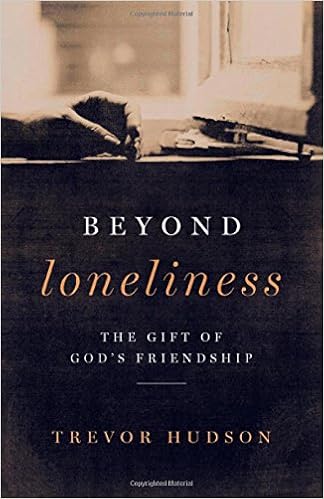
I write to encourage others. In my last blog (see "shattered glass" in the first paragraph), I wrote about the opposite of loneliness: friendship. Friendship, whether with God or with others, involves "(1) spending time together, (2) learning about the other, (3) being honest and transparent, (4) learning to be a good listener, (5) allowing for changing and maturing views of the other, and (6) learning how to enjoy being silent together" (Gary Moon's forward in Trevor Hudson's book Beyond Loneliness as Moon quotes *James Martin's insights from **William A. Barry).  

Social media can not replace the face-to-face time, but it can be, when used in encouraging ways, be a moment in time where we can feel that we have been seen and heard and loved. I so appreciated the give and take when my own daughter posted her "When Days Seem Hard" It was just what one mom needed to hear so that she could pick herself up and begin again. 

Loneliness can't be cured by social media, blogs, etc., but I hope I can use technology positively to invite myself and others into a friendship with God (the great thing is God is available during poopy diapers, academic meetings, traffic jams...in other words all the time), and into exploring ways of friendship with three-dimensional people (did I choose the right term...lol...geometry was never a focus of mine). For me, it takes intentionality. To not give up when lives seem so busy. To look at my schedule and see where I can give up something simply time-consuming and replace it with friendship. I'm interested in the creativity used by others to build friendships (so feel free to comment), and, if you're interested in an online Beyond Loneliness online community (not as a substitute, but as a starting point), here is the link to the book club


*The Jesuit Guide to (Almost) Everything: A Spirituality for Real Life by James Martin, SJ
** God and You: Prayer as Personal Relationship by William A. Barry, SJ